
How To Read Betting Markets In Horse Racing
How To Read Betting Markets In Horse Racing
Most punters watch prices.
Very few understand what they are looking at.
Learning how to read betting markets can provide valuable context that traditional form alone cannot offer.
Start With The Opening Price
The opening price is your baseline.
It represents the market’s initial assessment of a horse’s chance.
Every movement afterwards should be judged relative to that starting point.
Without an opening price, it is impossible to measure support or weakness accurately.
Watch Early Money
Early money often arrives long before racing begins.
This support can indicate confidence, interest or market expectation.
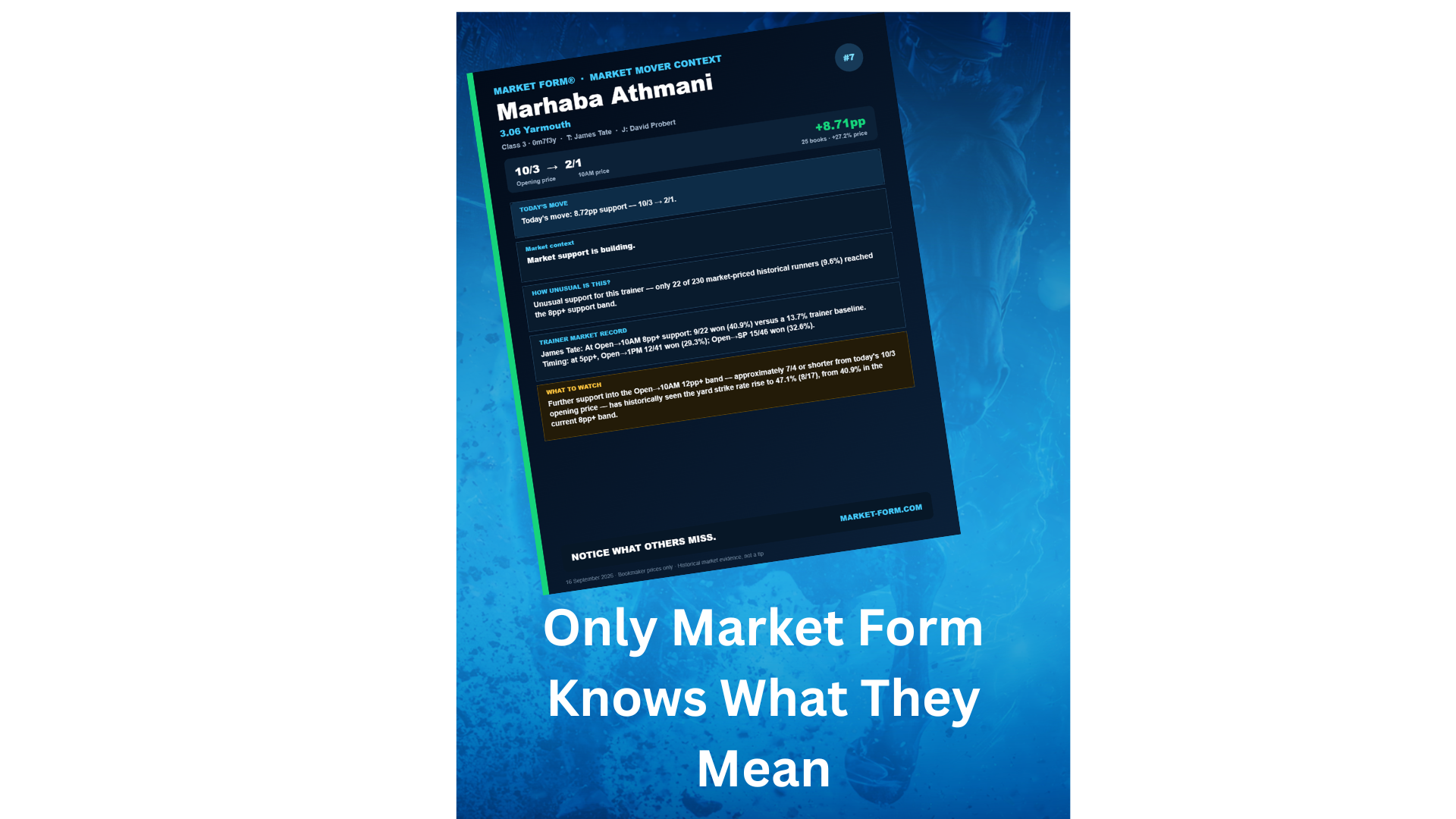
At DC Network we pay particular attention to opening-to-10am movement because it frequently provides the first indication of significant market behaviour.
Watch Sustained Support
One sharp move is interesting.
Multiple moves throughout the day are more significant.
Sustained support suggests continued confidence rather than a temporary market reaction.
Understand Drifts
A drift simply means the horse is becoming easier to back.
This does not automatically mean the horse cannot win.
However, persistent drifts can indicate a lack of confidence compared with market expectations earlier in the day.
Look For Repeat Behaviour
The biggest mistake bettors make is focusing solely on today’s market.
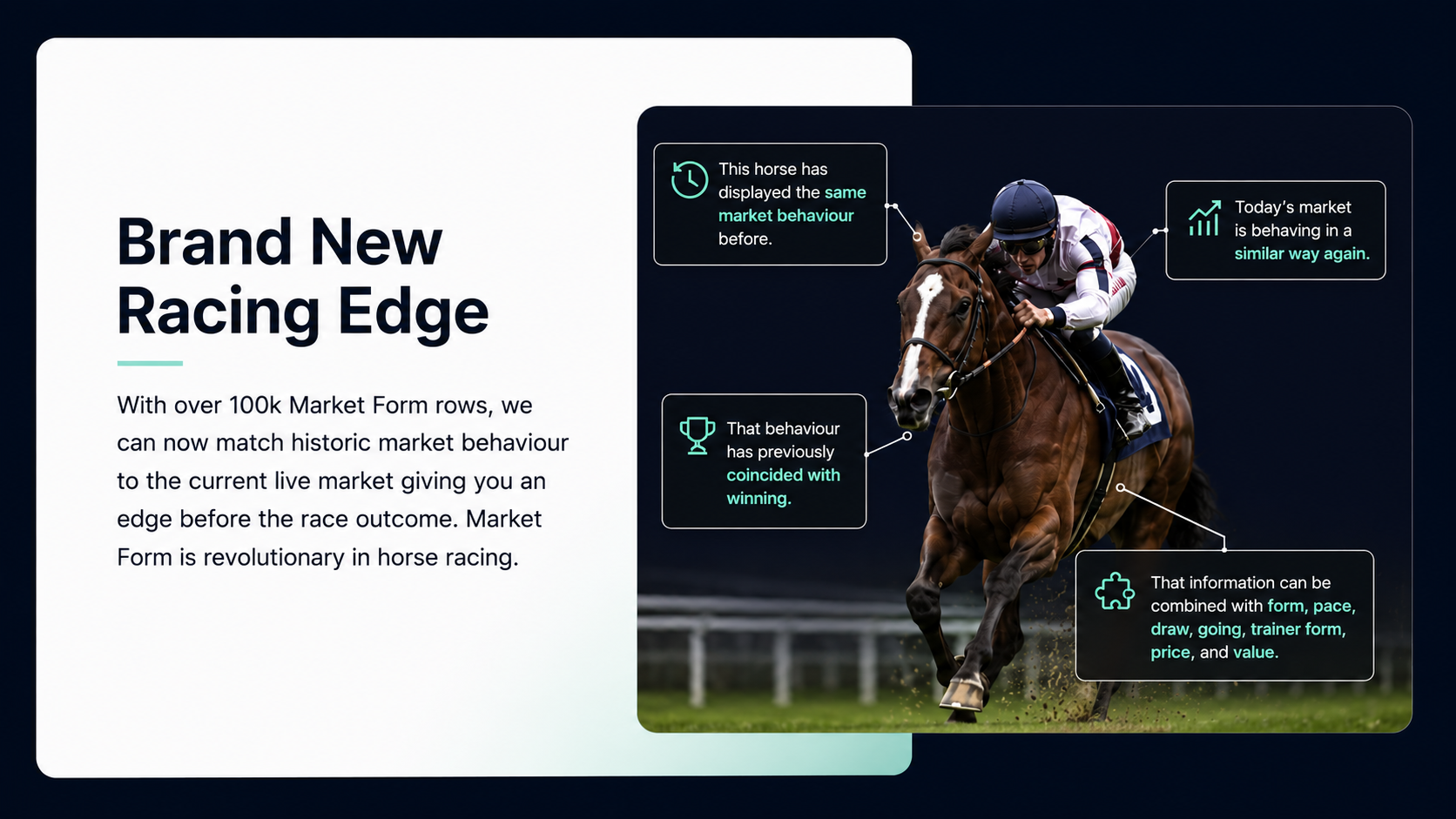
Today’s market becomes far more powerful when viewed alongside historical market behaviour.
Has the horse shortened like this before?
What happened last time?
Has this pattern occurred repeatedly?
These questions form the basis of Market Form analysis.
Ignore The Noise
Not every market move matters.
Not every gamble wins.
Not every drift loses.
The objective is not to react emotionally to price changes.
The objective is to identify meaningful behaviour and separate it from random market noise.
Final Thoughts
The betting market is one of the richest sources of information available to horse racing bettors.
Most people see prices.
The most successful market analysts study patterns.
Understanding that difference is the first step towards reading markets properly.