
Repeat Winners Are on Fire
Repeat Winners Are on Fire — But They Remain an Added Layer, Not a Blind Signal
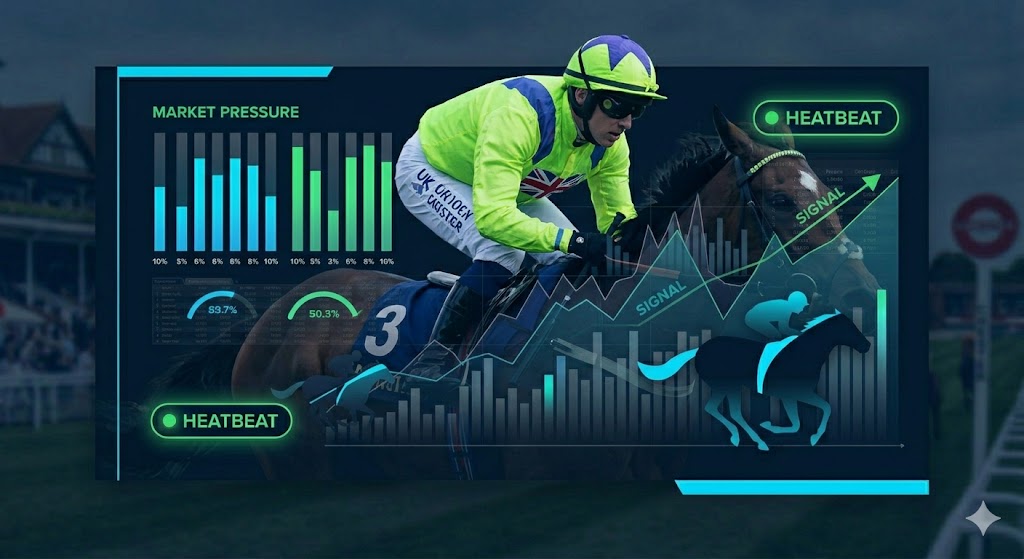
The Repeat Winner Signals have been in outstanding form recently, with a sustained run of winners and placed horses highlighting the value of repeatable market behaviour.
Recent qualifiers including Happier, Mr McWhinny, Camelot Days, Coul Angel, King Sharja, More Thunder and Blue Bolt have all won, while several others have reached the frame. It has been an impressive period for one of DC Network’s most distinctive market indicators.
However, it is important to understand what these signals represent—and how they should be used.
What Is a Repeat Winner Signal?
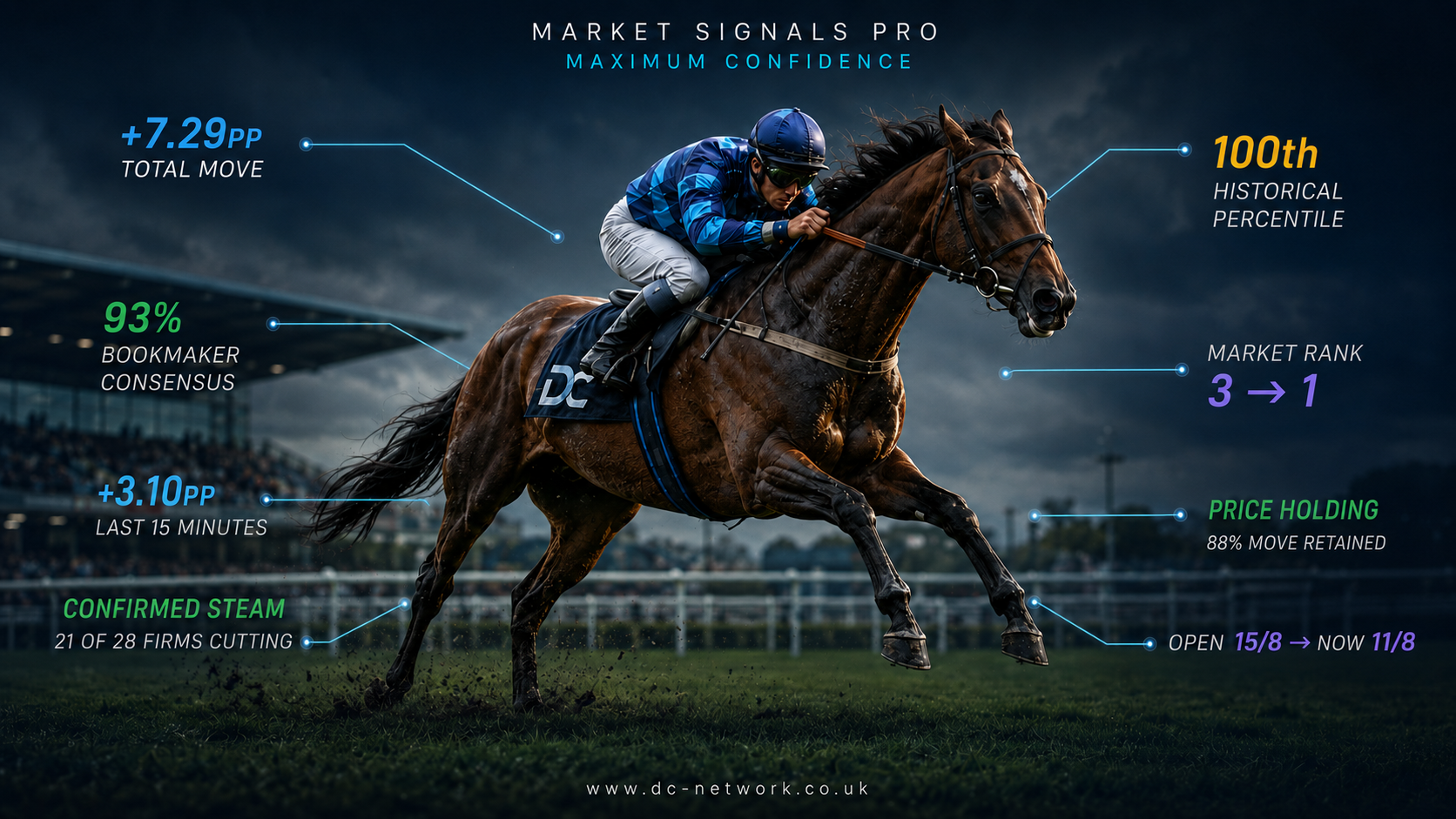
A Repeat Winner Signal is generated when a horse begins reproducing a market pattern that has previously been associated with a successful performance.
The system uses the horse’s historical Market Form to examine how its price behaved before earlier races. When similar market behaviour appears again, the horse can be flagged as a Repeat Winner.
This is not based on a trainer’s reputation, somebody’s opinion or a traditional racing tip. It is based on the horse’s own recorded market history.
In simple terms, the system is asking:
Has this horse previously attracted a similar type of market support—and did it perform successfully when that happened?
When the answer is yes, and the pattern begins repeating, the horse becomes worthy of closer attention.
Why Repeat Behaviour Matters
An isolated market move can happen for many reasons. Prices can shorten because of low liquidity, changing market conditions or activity elsewhere in the race.
Repeated behaviour is more meaningful.
If the market has supported a horse in a recognisable way before—and the horse performed well—it creates a historical reference point. When that same shape appears again, we are no longer looking at a completely isolated move.
We are seeing a behavioural pattern repeat.
That does not guarantee the same result, but it adds valuable context that would be difficult to identify from a conventional racecard alone.
The Recent Results Have Been Excellent
The latest archive shows just how effective these patterns can be when they align correctly.
Repeat Winner qualifiers have recently delivered winners across a broad range of prices, including shorter-priced runners and horses available at more substantial odds. That variety is significant because the signal is not simply identifying favourites or following the strongest horse in the betting.
It is identifying familiar behaviour relative to each individual horse.
The current run is exciting and provides further evidence that historical market behaviour can contain useful information. It also supports the central DC Network principle that every horse should be assessed as an individual rather than through broad, generic assumptions.
But strong results must not change how the tool is used.
An Added Layer—Never a Blind Signal
A Repeat Winner badge should never be interpreted as an automatic instruction to place a bet.
No market pattern can account for every factor affecting a race. Today’s opposition, current price, race conditions, suitability of the contest and the overall shape of the market still matter.
The signal is best used as an additional layer within a wider decision-making process.
For example, a member may already be interested in a horse because of its form or suitability for the race. Discovering that the horse is also reproducing a historically successful market pattern can strengthen the case.
Equally, a Repeat Winner may appear at a price that no longer offers value. The existence of the signal does not mean any available price should be accepted.
The right question is not:
“Has this horse received a Repeat Winner Signal?”
It is:
“Does this Repeat Winner Signal add meaningful evidence to the rest of the case?”
That distinction is crucial.
How to Use the Signals Properly
When a Repeat Winner appears, consider it alongside:
- The horse’s current price and whether that price still represents value.
- The strength and suitability of today’s opposition.
- The race conditions and whether they suit the horse.
- The timing and strength of the current market move.
- Other DC Network information, including Market Form and Fair Odds.
- Your own established betting criteria.
A signal that agrees with several independent factors is naturally more compelling than one standing completely alone.
There will also be occasions when the correct decision is to take no action. A useful analytical tool should help members avoid weak bets as well as identify interesting ones.
Patterns, Not Promises
The recent Repeat Winner results deserve recognition. The signals are performing exceptionally well and demonstrating why horse-specific market memory can offer a different perspective on a race.
But racing remains uncertain, and every method will experience losing runs. A strong period should not encourage larger stakes, lower standards or blind faith in every qualifier.
Repeat Winner Signals are designed to reveal something valuable:
A horse may be repeating the type of market behaviour that previously preceded a successful run.
That is powerful information—but it is still one piece of information.
Used with discipline, price awareness and proper race analysis, the signals can provide an excellent additional layer to a betting decision. Used blindly, their real purpose is lost.
Enjoy the strong run, respect what the data is showing, but continue to make each decision on its own merits.
Repeat Winners are on fire—but they remain evidence, not instructions.