Why Racing Is not taken seriously
Market Form® Opinion
Why Racing Struggles to Be Taken Seriously — and Why Saffie Osborne Deserved Better
Racing cannot demand the respect afforded to a major professional sport while repeatedly communicating like an amateur one. Ayr exposed the problem. The response to a historic St Leger showed the cost.
Horse racing regularly asks why it struggles to break into the wider sporting conversation. Why are major achievements not treated like major national sporting moments? Why does the public so often view racing as disorganised, inaccessible or suspicious?
Saturday at Ayr provided part of the answer.
The Ayr Gold Cup card was placed in doubt by heavy rain and standing water. Nobody should criticise officials for putting safety first, and nobody can control the weather. The problem was not that inspections were required. The problem was the uncertainty surrounding them and the absence of a clear, visible communication process.
There was an inspection at 12.20pm, followed by another at 1.45pm. Racing eventually went ahead with a revised programme beginning at 2.30pm. In between, those watching on television, standing on the racecourse or trying to operate betting markets were left waiting for information that should have been delivered quickly, consistently and authoritatively.
It looked improvised. It felt amateur. This was the showpiece day of one of the most important Flat meetings in the calendar, yet there appeared to be no public-facing chain of command and no dependable timetable for a decision.
Communication should be immediate
Why should the industry have to wait for inspectors to complete the course walk, return to the buildings, consult privately and then allow more time to pass before a clear announcement reaches everyone?
An on-course inspection team should carry direct communications. A phone or radio is hardly revolutionary technology. The moment a material decision is reached, it should be relayed simultaneously to the clerk’s office, the BHA representatives, television producers, the course commentator, bookmakers and the racecourse’s own digital channels.
The clerk of the course should not be the only visible point through which every scrap of information must pass. Safety decisions rightly belong with the qualified officials, but communication must be structured around an entire operational team.
Racegoers paid to attend. Broadcasters were filling airtime. Trainers, jockeys and stable staff needed to plan. Bookmakers were managing live markets. Punters were making decisions with real money. All of them deserved more than silence followed by a late announcement.
Inspect, communicate, announce
The solution does not need another committee or a six-month review. It needs a simple protocol that every racecourse follows.
A professional inspection protocol
- Set the inspection time: announce exactly when the course walk will begin.
- Prepare the participants: trainers and jockeys should be invited and ready before that time, not gathered afterwards.
- Set a decision deadline: tell the public when an update should be expected, even if the update is that more time is required.
- Communicate simultaneously: television, commentators, bookmakers, participants and racegoers should receive the same message at the same time.
- Publish the revised plan: if racing continues, issue the full amended schedule immediately.
If an inspection is scheduled for 1.45pm, the relevant people should be ready at 1.40pm. The course should be walked, the decision discussed and a target announcement time—perhaps 2.00pm—given publicly. If a final answer cannot be reached by then, an official update should explain why and provide the next deadline.
Uncertainty may be unavoidable. Silence is not.
Low sun is the same recurring failure
The same issue appears whenever hurdles or fences are omitted because of low sun. Everybody waits while a decision is made, and the full consequences can emerge only shortly before the start.
Removing obstacles can fundamentally change a race. It affects rhythm, jumping pressure, positioning, pace and the relative prospects of every runner. Yet punters can be expected to reassess the contest in minutes—sometimes while the horses are already at the start.
Low sun is not an entirely mysterious event. Racecourses know the layout of their tracks. They know the scheduled race times. They know where the sun is likely to sit during different parts of the year. The final safety call must always reflect the conditions on the day, but the likely contingency should already exist.
Every course should publish its contingencies
- If low sun affects a particular section of the track, identify in advance which fences or hurdles may be omitted.
- If a bend becomes unsafe, state which races can be rerouted and which must be abandoned.
- If racing is delayed, prepare alternative race times and running orders before the meeting begins.
- If conditions deteriorate beyond an agreed point, make the likely next action clear to participants and the public.
A contingency plan does not bind officials to an unsafe decision. It gives them a prepared framework. It also gives everyone else an understanding of the likely outcome instead of forcing the sport to invent its response in public.
Then racing wonders why history does not travel
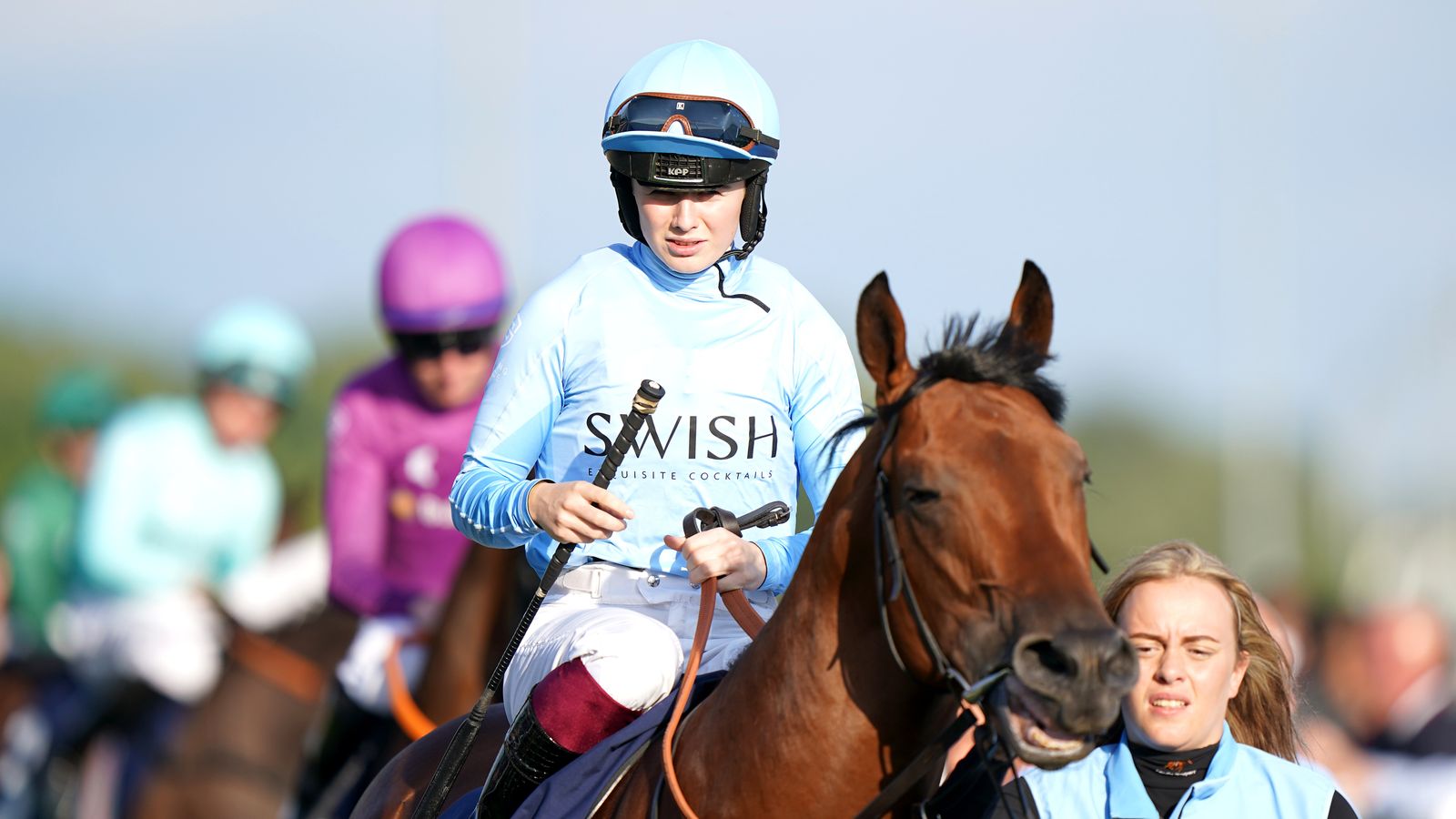
Only a week before Ayr, Saffie Osborne achieved something genuinely historic. Riding Highwayman in the 250th St Leger, she became the first woman to ride the winner of a British Classic.
That should have been one of the sporting stories of the year.
There was coverage, including from major broadcasters and national newspapers, so it would be wrong to claim that the achievement was completely ignored. But racing’s leadership failed to turn that coverage into a sustained national moment. Where was the coordinated campaign? Where was the aggressive promotion beyond racing’s existing audience? Where was the attempt to place Saffie across mainstream television, radio, digital media and the front pages as the history-maker she had become?
The sport was handed a perfect story: a 24-year-old jockey, a landmark first for women, the 250th running of the world’s oldest Classic and a horse who had started at 250-1 in a maiden only months earlier. You could not manufacture a better opportunity to sell racing to a new audience.
Yet, as so often happens, the moment largely remained inside racing’s own walls. The industry reported it to itself, congratulated itself and moved on.
This is the knock-on effect
The failure to maximise Saffie Osborne’s achievement and the confusion witnessed at Ayr may look like separate issues. They are not. Both reflect a sport that too often lacks decisive, coordinated leadership.
One week, racing fails to project an extraordinary human story far beyond its normal audience. The next, its flagship Saturday fixture appears disorganised when the weather turns. That is how public perception is formed.
Racing cannot complain that outsiders fail to take it seriously while giving them repeated reasons not to. Every avoidable delay, every information vacuum and every wasted promotional opportunity reinforces the idea that this is an inward-looking sport unable to present itself professionally.
There is also a more damaging consequence. When communication is poor, suspicion fills the gap. Racing already fights public assumptions that it is fixed, secretive or run for insiders. Keeping people in the dark—even through disorganisation rather than intent—feeds precisely the perception the sport claims it wants to eliminate.
Act like the professional sport you claim to be
The weather will remain unpredictable. Course inspections will still be necessary. Obstacles will sometimes need to be omitted, and meetings will occasionally be abandoned. None of that is a failure.
Failing to prepare for predictable possibilities is a failure. Failing to communicate is a failure. Failing to make the most of a historic sporting achievement is a failure.
Racing does not lack stories, talent or drama. Saffie Osborne proved that emphatically. What it lacks is the will and organisation to present those assets with the urgency and professionalism they deserve.
If racing wants to be treated like a serious professional sport, it must start behaving like one.